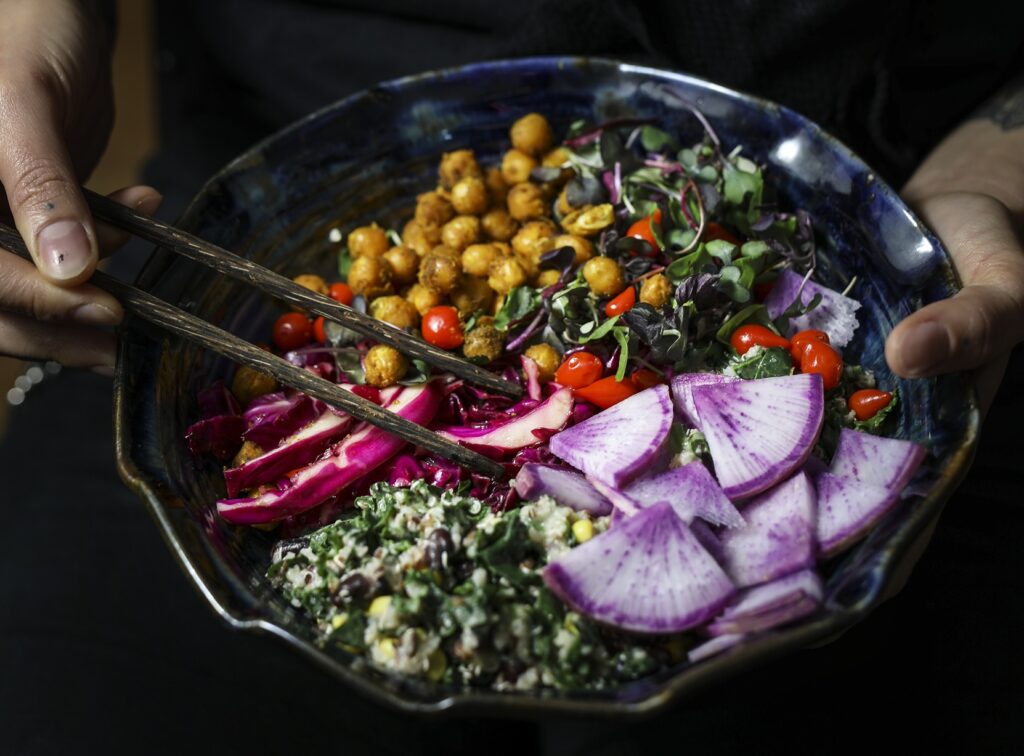
Nutrition is complex. It’s personal. It’s not just about “healthy eating” and salads. It’s about developing a healthy relationship with food – one that allows you to nourish your body AND enjoy what you eat, including a better understanding of not only nutrient rich foods, but also how to fit in your preferences into your dietary choices.
As nutritionists, our goal isn’t to switch you solely to lean meats and veggies. It is to change your understanding about your body, and create a relationship with food that is better for not only your physical health, but your mental health as well.
The problem is that we’re living in a world where foods are often categorized as “good” or “bad.” Where people – even those that have never worked in nutrition – can make claims about whether foods are poisoning our bodies, or make it seem like certain foods are significantly better than others. This is especially common on social media.
How Social Media is Changing People’s Views on Food for the Worse
Social media platforms are filled with simplified advice, personal anecdotes, and dramatic claims about diet for anyone that is able and willing to watch them.
Posts that warn against “toxic” foods or that elevate certain ingredients as cures for all health problems tend to spread quickly. They are rarely created by registered dietician nutritionists and, even when they are, it is not always possible to communicate all of the many caveats that are required for any nutritional recommendation.
Not only is this information misleading – most foods are “good” when you’re hungry and you need to eat – but it causes us to feel like food is a battle – like your choices in food are between helpful and harmful, when nutrition is so much more complex than that. It also isn’t personalized, and it teaches us the wrong things about foods that can cause issues in our ability to make decisions around food in the future.
“The more we emphasize harmful foods as a society, the more damage it does to our mental health around foods,” says Kimberly Laudin, a therapist here on Long Island and owner of Nassau Counseling Services. “Social media is causing many people to have a harmful relationship with food, something that leads to the development of eating disorders and worsening mental health.”
For many people, scrolling through food content leaves them with the belief that they are failing if they eat certain foods, or that they must follow rigid rules to be healthy. This environment encourages restrictive eating patterns that are difficult to sustain and that can harm both body and mind.
What Nutritionists Actually Emphasize
Nutritionists generally avoid calling foods “good” or “bad.” While some foods are clearly more nutrient-dense than others, most dietitians view eating through the lens of balance and long-term patterns. A single food or meal does not determine a person’s health. Instead, what matters is variety, moderation, and whether someone’s overall diet supports their energy, physical function, and mental well-being.
Rather than restricting your diet entirely, we really just need to understand how nutrition works and the benefits of variation. Nutritionists encourage flexibility. That means recognizing that a piece of cake or a fast-food meal does not erase the benefits of a week filled with vegetables, whole grains, and protein sources. It also means allowing space for enjoyment, because a rigid, guilt-driven relationship with food is just as harmful as overeating.
Why This Matters for Mental Health
The way we talk about food has a direct impact on how people feel about themselves. When someone constantly feels like they are failing at eating “the right way,” it can lead to shame, disordered eating, and anxiety. By contrast, when food is approached as nourishment that includes both nutrient-rich meals and enjoyable choices, people are more likely to sustain habits that support both their physical and emotional health.
Building a Better Relationship with Food
Nutrition will always be more complex than a social media post makes it seem. The challenge for nutritionists is not just to provide information, but to counter the oversimplified and often harmful messages people absorb online.
By reframing food as something to support health and enjoyment, it becomes possible to develop a balanced, sustainable relationship with eating – one that works for the body and the mind. If you are looking for someone to help you with your nutrition – and someone to help you develop a healthier relationship with food – please reach out to My Island Nutrition, today.